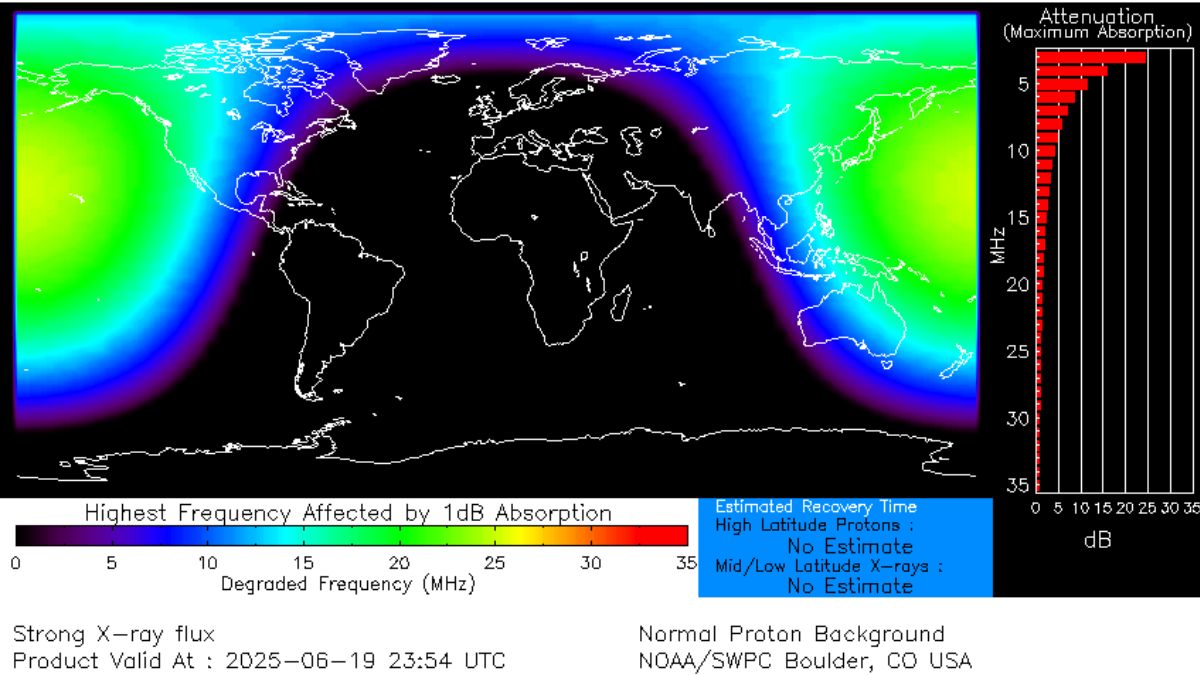
On June 19, a powerful X1.9- Class Solar Flair exploded from the active region of the Sun, 4114, which reached EDT (0150 GMT, 20 June) at 9:50 pm, and led a Shortave Radio Blackout for Hawaii, in the Pacific Ocean. Although the flare was with a large explosion of X-rays and ultraviolet light, it did not appear to be associated with a very powerful coronal mass ejection (CME), so there would be no herors for optimistic skywatchrs at this time. However, the energetic enthusiast, unstable an adequate magnetic filament in the southern hemisphere of the Sun, indicated on the higher activity to come.
Solar flare from x1.9 Sunspot 4114 disrupts radio signals, fears of future geomagnetic storms
Live and Spaceweather.com according to space season ReportsElectromagnetic radiation reached Earth within minutes, ionized the upper atmosphere and disrupted shortway radio communication below 25 MHz. In the Pacific region, the Ham Radio operators reported a sudden loss of signals after the extreme of the flare. This is caused by a powerful solar disturbance that collides with the Earth’s ionosphere, increases the electron density and weakens the ability to absorb high-existing signs. The result is signal or loss, as it occurs during the period of acute solar activity in general.
Solar flares are ranked in strength, and X-Class Flair are the most intense. Flares from SunSpot 4114 – Rated on X1.9 – Currently one of the strongest Solar cycleIt follows the explosion of a few days before the same region, rating at X1.2. The region has now monitored closely due to its constant magnetic complexity and explosive capacity.
Although no CME was with the latest provoking, experts suggest that future explosions can be more geophysical than 4114. If a CME is launched in subsequent flarers, geomagnetic storms and oralal activity can be followed.
Space weather forecast and Arora 3-day geomagnetic outlook and dedicated solar activity of update noaa are available on blogs.