The 5A new satellite planetarium has been developed by Mune Space, which promises to revolutionize the fire by scanning the entire earth every 20 minutes. The first satellite in the network, the Fireset Protophylite-was removed in March 2025-has returned its first infrared imagery from the low-Earth class. With the next generation of multi-band IR sensor, which allows 5-meter-wide heat signature to map, the space telescope can immediately swap that information, where or when to give up-to-minute intelligence on the wildfire. The entire constellation, which will eventually reach more than 50 satellites, aims to supply important information to the first respondents, policy makers and communities at risk from the wildfire.
Fireset detects 5-meter wildfire from space using advanced infrared imaging system
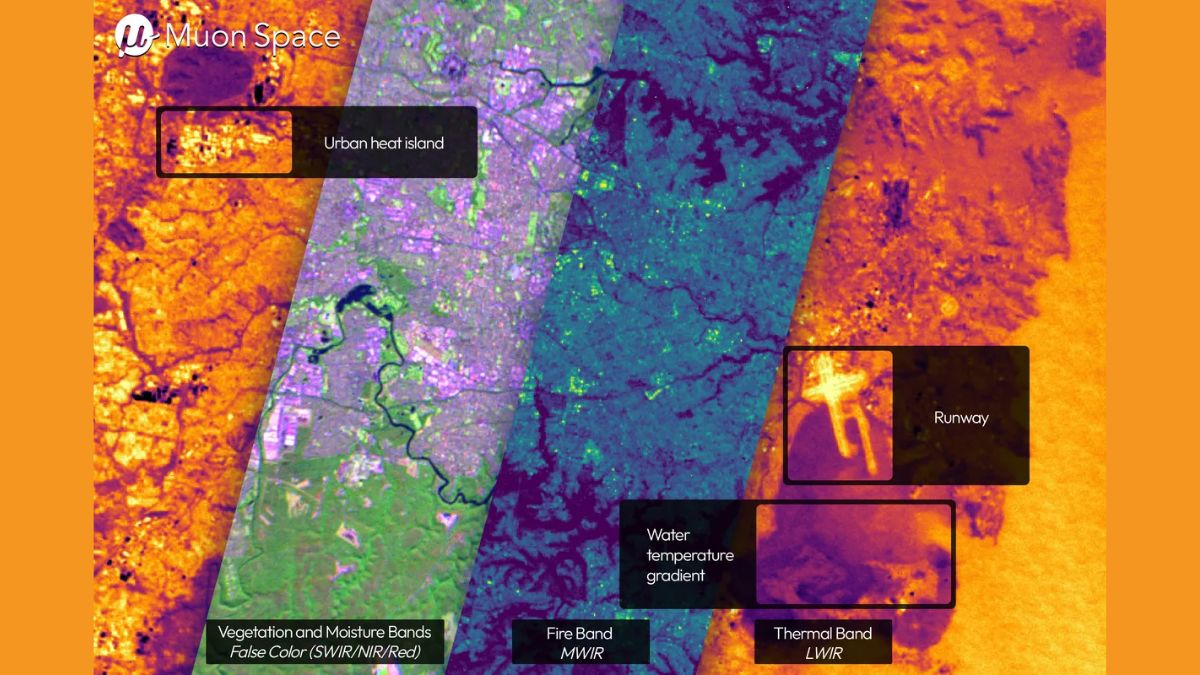
According to a mission Update From the mune space, the imaging system of the firset can detect a small fire in a 5 meter diameter using six separate infrared channels. This allows the satellite to filter false positivity and identifies the dangers of very real fire even at low burnt temperatures. Travel on low Earth orbitThe satellite scanned the 1,500 km area, which in view of the heat from the sites from the Sydney airport to the Kilaua volcano in the Hawaii and the Sarir oil area of Libya.
High-resolution images confirm that the satellite’s IR sensor designs are providing quality, providing quality dataDan McClaces, the chief scientist at Muon, described success as a jump in distance sensing, especially in thermal imaging – technically demanding domain with some commercial players. This effort is part of a joint initiative between Muon Space and Earth Fire Alliance.
In addition, the capacity of the fireset to track gas flares, urban hot spots and natural heat sources makes the fireset useful for climate and disaster monitoring beyond the fire detection. It is planned to launch the other three fireset satellites in 2026, and the entire constellation is fully deployed and expected to be in action by 2030.
As mentioned by CEO Johnny Dyer, the rapid growth of fireset from mission design to space-purpose reflects the MUON’s strategy for the manufacture of mission-faced satellites. The constellation is expected to fill a significant data gap in detecting space-based wildfire, which provides new equipment for governments working to reduce the global threat of respondents, scientists and forests.